









Se Habla Espanol
Our Blog
FIFA World Cup Poses Opportunity For Labor Unions to Advance Contract Negotiations and Pressure Hospitality Industry
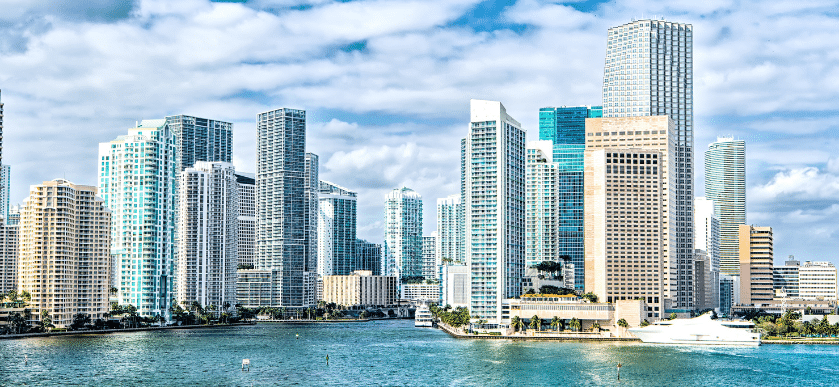
As North America welcomes teams and audiences from around the world for the 2026 FIFA World Cup tournament, cities across the U.S. are experiencing a surge in tourism, pressure on the hospitality and tourism industries and increase potential for wage violations and worker exploitation. Eleven U.S. cities are hosting matches, with the U.S. opening match having taken place on June 12, 2026 in Los Angeles, CA. The U.S. host cities include Philadelphia, Seattle, Miami, East Rutherford, Kansas City, Atlanta, Boston, Houston, Dallas, San Francisco, and Los Angeles. Coupled with celebration plans for the 250th anniversary of the U.S. in multiple cities, the hospitality industry is expecting significant traffic over the coming summer weeks. Even though increased airfares, entry barriers, and travel hesitancy from international travelers are impacting hotel bookings, with a majority of cities falling below expected projections, hospitality workers are still likely to feel the weight of increased tourism because of significant labor shortages in the hospitality and leisure sector.
In February 2025, the American Hotel & Lodging Association (AHLA) reported that 65% of surveyed hotels faced staffing shortages. The industry is experiencing significant understaffing and high workload pressures, as well as a stranded workforce caused by restrictions on seasonal visa programs. This creates an optimal leverage opportunity in the eyes of organizers in U.S. host cities to advocate for labor negotiations and stronger protections. These workers are integral to the functioning of these cities, especially during peak events or celebrations. This article first introduces hospitality workers’ vulnerability to wage violations and then reviews recent developments in labor organizing gains in multiple U.S. host cities.
The hospitality industry is subject to various state and local laws that differently impact hospitality workers. Laws regarding paid leave, minimum wage, rest breaks, training requirements, misclassification, and tip pooling or tip skipping are often subject to geographically specific regulations. The industry also operates under the broader Fair Labor Standards Act (FLSA) for wage and hour issues. Illegal tip pooling is a practice in which employers require employees to share tips with managers, supervisors, or other non-customarily tipped staff and is prohibited under FLSA. For example, back-of-house staff including cooks and dishwashers are generally not allowed to receive a share of the tip pool unless the employer pays the full minimum wage ($7.25/hour) and takes no tip credit, at which point employees who are not customarily tipped employees can participate in the tip pool, which is referred to as a non-traditional tip pool. Tip skimming refers to when an employer may withhold or pocket tips meant to be distributed to staff, which is considered a form of wage theft. FLSA does not allow employers to keep any portion of employees’ tips for any purpose. A tipped employee must earn enough in tips to bring their total earnings to the overall federal minimum wage. The federal minimum wage for tipped employees before tips is $2.13 per hour, with the requirement that tip credits make up the rest of their paychecks. In September 2021, the U.S. Department of Labor (DOL) issued a final rule (effective date November 23, 2021) modifying its provisions around tip pooling known as the 2021 Civil Money Penalty (“CMP”) Rule. Namely, the CMP Rule reinstated the DOL’s ability to assess civil money penalty claims against employers who violate the FLSA by taking tips earned by their employees. It also clarified that (1) managers and supervisors are not prohibited from contributing to mandatory tip pools though they are still barred from receiving tips from tip pools and (2) managers and supervisors may only keep tips that they receive from customers directly for services that the manager or supervisor directly and “solely” provides (emphasis added). In the U.S., many hospitality workers rely on tips for their income, meaning that practices like illegal tip pooling and tip skimming are particularly harmful to a large sector of the workforce. Yet, illegal tip pooling and tip skimming are unfortunately highly common occurrences in the hospitality industry and often go underreported due to fears of retaliation.

On June 2, 2026, The Philadelphia Inquirer reported on the impact different countries’ tipping customs may have on the dining scene during the World Cup games in Philadelphia. Some restaurants have even opted to include a 20% service charge to account for variable tips from international tourists who may not share the same tipping practices to address the anticipated lack of tips. Other restaurant owners in Philadelphia believe that international tourists would be aware of and understand U.S. tipping culture and do not anticipate a deficit during the games. Ahead of the games, in various U.S. cities, there has been an increase in hiring particularly for restaurants and bars. The Bureau of Labor Statistics reported that the food services and drinking places added 48,000 jobs and the leisure and hospitality industry overall added 70,000 jobs in May 2026. The addition of new jobs, however, does not necessarily equate to stronger workplace protections to combat the potential of worker exploitation. In fact, the addition of new jobs to the hospitality industry could potentially exacerbate operational and managerial challenges and increase pressure to raise wages.
In addition to potential low wages due to different tipping habits of international travelers, hospitality workers may also be pressured to maximize hours due to the combination of understaffing and the sudden influx of travelers for the World Cup, which can lead to rest break violations. Rest break violations occur “when employers fail to provide legally required short breaks during the workday, interrupt those breaks, or fail to pay employees for breaks that must be compensated under the law.” Employers are also prohibited from deducting time for rest breaks that were never taken or discouraging employees from taking breaks they are entitled to. Although FLSA does not require employers to provide rest breaks, many states do. California, Colorado, and Washington are 3 of 11 states hosting games for the World Cup that require employers to provide paid rest breaks. All three states require a paid 10-minute break for every 4 hours worked. Hospitality workers who work outside, such as stadium ticket vendors, concession stand workers, valet, or parking attendants may experience heightened dehydration or overheating during the hot summer months, which makes rest break time protections even more imperative for the health and safety of workers.
The Hospitality Workers’ Union, UNITE HERE, has been organizing to use the World Cup as an opportunity to advance contract negotiations and secure proposals that would ensure good wages and benefits. In Philadelphia, UNITE HERE Local 274 posted a press release on June 2, 2026 warning of a possible strike ahead of the World Cup games as contracts remain expired at multiple Center City hotels and settlements have yet to be reached. In Los Angeles, the nearly 2,000 workers at SoFi Stadium who are part of UNITE HERE Local 11, are in the process of voting whether to authorize a strike in the immediate days before SoFi Stadium is scheduled to host its World Cup matches. Conversations around workplace safety and wages are at the core of these food and beverage workers’ proposals. In Seattle, another hosting city, hotel workers in UNITE HERE Local 8 are fighting for a “new union contract that includes year-round healthcare coverage, protections from ICE, fair raises, and pre-pandemic staffing levels.” Around 113 part-time and full-time union hotel workers at the Hilton Embassy Suites Pioneer Square hotel in Seattle are voting whether to authorize a strike following their contracts’ expiration on May 31, 2026. In Houston, stadium workers in UNITE HERE Local 23 have threatened to engage in rallies and direct actions to advocate for wage increases. On May 19, 2026, New York City hotel operators reached an eight-year long labor agreement covering an estimated 27,000 workers and averting a strike. The nearly $100,000 agreement secured wage increases and expanded healthcare benefits.
Big events like the World Cup give labor unions an optimal position to advance their proposals and build momentum because these events often cannot be rescheduled and require mass-coordination and operational work. Hospitality unions have greater visibility during these periods and will often structure their arguments around a thematic approach such as cost of living or working conditions. While it can often take years of negotiations for resolutions and settlements, timing and context are critical components to the success of such negotiations. The World Cup is also expected to take a strain on transportation in many of these major cities, particularly those whose transportation infrastructure may not be well-equipped to support high volumes of tourists. High-volume events and celebrations like the World Cup are an opportunity for cities to practice sustainable economic development and support workers who make these events possible. So, although hospitality workers suffer from understaffing, illegal tip skimming and pooling practices, and are vulnerable to exploitation and wage violations, there are tools and resources to combat these injustices. These tools and resources have the potential to be particularly impactful when deployed during critical times for potential economic growth like large sporting events. As the summer progresses, it will be interesting to see whether organizations act on their intentions to strike or whether negotiations can be reached.
Contact
Miller Shah LLP
While this website provides general information, it does not constitute legal advice. The best way to get guidance on your specific legal issue is to contact a lawyer. To schedule a meeting with an attorney, please call 866-540-5505 or complete the intake form to email us. To inquire about employment opportunities with Miller Shah LLP, please see our Opportunities page.
NJ Collingswood
900 Haddon Avenue, Suite 304-8
Collingswood, NJ 08108

866-300-7367
Fax number
866-540-5505
Telephone
Attorney Advertising. This information is designed for general information only. The information presented should not be construed to be formal legal advice nor the formation of a lawyer/client relationship. Past results and testimonials are not a guarantee, warranty, or prediction of the outcome of your case, and should not be construed as such. Past results cannot guarantee future performance. Any result in a single case is not meant to create an expectation of similar results in future matters because each case involves many different factors, therefore, results will differ on a case-by-case basis. By providing contact information, users acknowledge and give explicit consent to be contacted via the methods of communication provided, including SMS. Message and data rates may apply. Message frequency may vary. Reply STOP to opt out.
NUVEW | Copyright 2026 All Rights Reserved | Accessibility Notice | Privacy Policy
Alden Hey - Project Analyst
PA Philadelphia | 866-540-5505
Alec J. Berin - Partners
PA Philadelphia | 866-540-5505
Alfonso Vilaboa - Partners
NY New York City | 866-540-5505
Ana Barba - Project Analyst
NY New York City | 866-540-5505
Anika S. Keuning - Project Analyst
NY New York City | 866-540-5505
Anna D’Agostino - Associate
NY New York City | 866-540-5505
Arman Borghei - Law Clerk
PA Philadelphia | 866-540-5505
Bruce D. Parke - Partners
PA Philadelphia | 866-540-5505
Cameron Smith - Project Analyst
PA Philadelphia | 866-540-5505
Caroline Soper - Project Analyst
NY New York City | 866-540-5505
Catalina Rey - Of Counsel
FL Miami | 866-540-5505
Christopher A. Miller - Associate
PA Philadelphia | 866-540-5505
Deborah C. England - Of Counsel
CA San Francisco | 866-540-5505
Elise M. Wilson - Law Clerk
NY New York City | 866-540-5505
Emily Aikens - Project Analyst
NY New York City | 866-540-5505
Eric L. Young - Of Counsel
PA Philadelphia | 866-540-5505
Faaria Zubair - Project Analyst
NY New York City | 866-540-5505
Gina S. Demetriades - Office Staff
CT Chester | 866-540-5505
Heidi A. Wendel - Of Counsel
NY New York City | 866-540-5505
Henry Fina - Project Analyst
PA Philadelphia | 866-540-5505
Ian S. Lam - Associate
PA Philadelphia | 866-540-5505
Isack Fadlon - Of Counsel
CA Los Angeles | 866-540-5505
James C. Shah - Partners
CA Los Angeles | 866-540-5505
James E. Miller - Partners
CT Chester | 866-540-5505
Jasmine Roman - Office Staff
CT Chester | 866-540-5505
Jayne A. Goldstein - Partners
FL Miami | 866-540-5505
Jillian M. Lussier - Office Staff
CT Chester | 866-540-5505
Jocelyn McNamara - Law Clerk
NY New York City | 866-540-5505
Johanna C. Richter - Law Clerk
PA Philadelphia | 866-540-5505
Jonathan A. Dilger - Office Staff
NY New York City | 866-540-5505
Katherine W. Frederick - Office Staff
CA Los Angeles | 866-540-5505
Katie Canfield - Legal Assistant
PA Philadelphia | 866-540-5505
Kolin C. Tang - Partners
CA Orange County | 866-540-5505
Kyla Golding - Project Analyst
PA Philadelphia | 866-540-5505
Laurie Rubinow - Partners
CT Chester | 866-540-5505
Leanne Alvarado - Project Analyst
NY New York City | 866-540-5505
Madison A. Gregg - Associate
NY New York City | 866-540-5505
Mark Xiao - Associate
NY New York City | 866-540-5505
Matthew P. Suzor - Associate
PA Philadelphia | 866-540-5505
Natalie Finkelman Bennett - Partners
PA Philadelphia | 866-540-5505
Nathan C. Zipperian - Partners
FL Miami | 866-540-5505
Nicholas Day - Of Counsel
NJ Collingswood | 866-540-5505
Nicholas K. Ono - Law Clerk
NY New York City | 866-540-5505
Nicole Jefferson - Project Analyst
PA Philadelphia | 866-540-5505
Shuping Li - Law Clerk
NY New York City | 866-540-5505
Stephen T. Rutkowski - Law Clerk
PA Philadelphia | 866-540-5505
Sue Moss - Legal Assistant
PA Philadelphia | 866-540-5505
Sydney D. Finlay - Associate
CA San Diego | 866-540-5505
Talia Chang - Project Analyst
PA Philadelphia | 866-540-5505
Tara Gideon - Office Staff
PA Philadelphia | 866-540-5505
Tina Moukoulis - Staff Attorney
PA Philadelphia | 866-540-5505
Tracy Feldman - Office Staff
PA Philadelphia | 866-540-5505
Zacky P. Rozio - Of Counsel
CA Los Angeles | 310-203-0600